Tofu from a Remote Village of Guizhou Province in China

In olden days in China, when people were poor and couldn’t afford meat, they would substitute tofu instead. Tofu was a cost-free alternative since they didn’t need to spend money on growing beans and processing them into tofu. Scientists have since proven that tofu is rich in nutrients and even healthier than meat.

Yellow Bean made Tofu

When I was young, my mom would always prepare a large dish of tofu on festival days or when we had guests visiting. It was a skill known by all the women in the village. Making tofu was considered an important event during significant ceremonies such as weddings, housewarmings, birthdays of the elderly, and funerals. Prior to the ceremonies, at the village meeting, the village leader would assign the task of making tofu to at least four women and two men, who, in the absence of tap water, would need to fill the water tanks.

The first step in making tofu is soaking the beans. Then, two or three people would grind the beans using a stone grinder made by the village craftsmen. The grinder consists of two round stones, one stationary and the other rotating around a wooden core. Each family owns two pairs of grinders, one for grinding dry powder and the other for liquid substances. During the grinding process, one person stands beside the grinder and pours water-mixed bean particles into the hole of the upper grinder, while two (or one) people hold and pull the wooden handle to rotate the upper grinder. The soybean milk is squeezed out of the grinders, flows along a wooden channel, and drips into a pan. Once the grinding is complete, the raw milk is poured into a large iron pan placed on a stove fueled by charcoal, dry tree branches, corn cobs, and bean tree wood.

When the milk reaches boiling point, the chefs strain it through gauze to remove the bean dregs, then return the pure milk to the pan and bring it to another boil. At this stage, the tofu-making expert adds melted brine to the milk until it solidifies. From what I’ve observed and heard from my mom and other women in the village—I myself have never made tofu—they usually add the brine to the milk three times. During the solidification process, the heat is kept low. If people prefer firm tofu, they can boil it for a longer time once the entire pot of tofu has solidified.

Once all the dishes are ready, tofu is always served last and placed in the center of the table, appearing white, vaporous, and delicately trembling. A special spicy sauce is prepared specifically for tofu. It involves heating rapeseed oil until it boils, then pouring it into a bowl of chili powder and adding soybean sauce, salt, chopped green onions, chopped coriander, and cordate houttuynia. When a piece of tofu is dipped into this spicy sauce and placed in the mouth, a tender, trembling, hot, and spicy combination of flavors instantly awakens the senses.

Apart from the plain tofu dish, there are variations such as stinky tofu, tofu with mildew, and tofu with blood. Additionally, Chinese cabbage leaves can be added to the unsolidified soybean milk to create “leaf tofu,” which offers a different taste and is lower in fat content.

Tofu is available in Asian and American supermarkets here, but it tastes different from the tofu in my hometown. Even within the same village, different people make tofu with distinct flavors. I am most familiar with my mom’s tofu, which has left a deep imprint on my taste memory. I believe that is what is often referred to as “mom’s taste,” and all the tofu I have consumed should embody the essence of “hometown taste.”

While tofu used to be an affordable and easily accessible food, for me, it feels distant and expensive to obtain now.

Fear and Dream Early in the Morning

At 5 am, I woke up from my late sleep last night. My body felt heavy and my mind was spinning. Even if I got out of bed, I couldn’t concentrate on reading or writing, and I knew I would spend the entire day in a dazed and low mood. I closed my eyes, trying to continue the unfinished imaginings from before I fell asleep. It was a romantic story, and I was the protagonist. However, the yellow light from the street lamps and the cars passing by in front of my house disrupted my reverie. Nothing felt romantic or beautiful; instead, a sense of fear slowly enveloped me.

Where was I? What was I doing? What would I do? Where would I go? I had no answers. The bed, the house, the sounds—everything seemed unfamiliar to me. I forced myself to think about the romance in order to overcome the fear, but the fear and romance collided in my mind. In a daze, I drifted into a light sleep.

I found myself walking on the road next to my aunt’s house, which connected the primary school and middle school where I once studied. I spotted a few old teachers, but I felt too shy to greet them, so I turned away and pretended not to see them. An artist famous in my hometown was playing the flute nearby. I picked up the sticks on the table in front of him and tapped on a stainless plate, but I couldn’t catch the rhythm of the flute. Then, out of nowhere, the handsome man from my imaginary story walked beside me. He was dressed in a pristine white suit and jeans, and his bangs were cut and combed up, making him look more mature. On his shoulders sat a girl who was our daughter. We were on our way to visit my aunt. A boy I had a crush on during my teenage years stood at the edge of the road near the school gate, watching me, my handsome husband, and our daughter. I lifted my head and felt an overwhelming sense of satisfaction.

As more cars passed by, the noise grew louder. I had a sense that I was in a dream, but I couldn’t discern where I was lying, as the road where the cars were running resembled the one that connected the primary and middle schools. So, I must be in my hometown, in the remote town in China. But no, the crossroad to the left of our neighborhood flashed in my mind. I realized I wasn’t in China; I was in the US. I wasn’t in my youth; I was middle-aged.

Though my mind yearned for clarity, I didn’t want to let go of my dream and that sweet feeling. I struggled to return to the dream, to the past. However, my son called out to me, wanting to play games. I opened my eyes, and the dream and the feelings faded like a fleeting film, leaving me empty and lost. Just like every awakening dawn and sleepless midnight, as soon as the bright light filled the room and touched me, the fear receded, along with the sweetness.

Falling into Kyung-soo and Tae-sub Makes Me Lonely

On their way up the stairs, Kyung-soo suddenly grabbed Tae-sub’s hand and pulled him towards the corner of the staircase. Tae-sub’s left hand held onto the edge of the wall, his long, white, and clean fingers lightly touching the cement surface. They clicked, moved, and then lifted. The shot blurred and transitioned to three roses blooming in vibrant red and yellow hues.

Finally, Kyung-soo’s mother had accepted her son and his boyfriend Tae-sub. They were all gathered at Kyung-soo’s apartment, enjoying a meal together. When Mom got up to prepare soup, Kyung-soo playfully brushed his bare feet against Tae-sub’s, giving him a teasing smile. Tae-sub responded, “Don’t.” Mom turned around and asked, “What? What did you say?” Tae-sub stuttered, “K-Kyung-soo… Kyung-soo said something.” Mom turned to Kyung-soo and inquired, “What is it that you want?” Kyung-soo calmly replied, “Nothing. Let’s have some wine.” Tae-sub quickly interjected, “No, I don’t drink.” Kyung-soo fetched two glasses, walked back to the table, and winked at Tae-sub with one eye. Feeling shy and nervous, Tae-sub glanced at Mom’s back and then turned to Kyung-soo, giving him a playful “Don’t be naughty” expression.

 https://www.bilibili.com/video/av5499533?from=search&seid=8649104216555026641

These two scenes are the most memorable among all the images of the two lovers together. I can’t recall how many times I’ve watched them! Every time I see those scenes, my heart races; they are incredibly beautiful and romantic! https://www.bilibili.com/video/av1045833/?spm_id_from=333.788.videocard.5

I finished watching the show two days ago, and now I’m watching it for the second time. I’ve seen all the cut videos, interviews, bloopers, behind-the-scenes footage, and music videos about them. I adore these boys, and it’s hard to put into words the feeling I have right now. I’ve tried to distract myself by watching other romantic shows and the shows featuring these two actors, but none of them can evoke the same intense affection in me. https://www.bilibili.com/video/av1045768/?spm_id_from=333.788.videocard.9

Unlike traditional boy-girl romantic films and shows, I can immerse myself in the stories and imagine my own romance. The emotions I feel cannot be replaced by ordinary love stories. I am deeply moved by Kyung-soo and Tae-sub, especially Tae-sub, who possesses a rare combination of tenderness, sensitivity, shyness, sentimentality, and bravery! https://www.bilibili.com/video/av2471565/?spm_id_from=333.788.videocard.13

When I watch their music videos or listen to the background music, I feel like I’m immersed in a world surrounded by roses, filled with pure love, genuine people, sunshine, and a clear blue sky. It’s like walking alone on a beach during sunset, sitting under a maple tree on a warm autumn day, standing atop a mountain admiring the breathtaking views, or snuggling in a warm bed on a snowy winter morning. https://www.bilibili.com/video/av12725167/?spm_id_from=333.788.videocard.12

Because of this romantic story, I have started learning the Korean language and have made an effort to understand musicals, as Song Chang-eui, the actor who plays Tae-sub, is known for his work in musical dramas. I have also been researching topics related to homosexuality, bisexuality, heterosexuality, gay culture, lesbian culture, BL (Boys’ Love), GL (Girls’ Love), and girls who enjoy BL content.

The more I delve into the background of this story, the more captivated I become by the show. However, this fascination also leaves me feeling lonely, as there is no one with whom I can share my feelings, and it becomes challenging to accurately express my emotions and mood to others.

To the Gay Couple Tae-sub & Kyung-soo of Television Series Life Is Beautiful

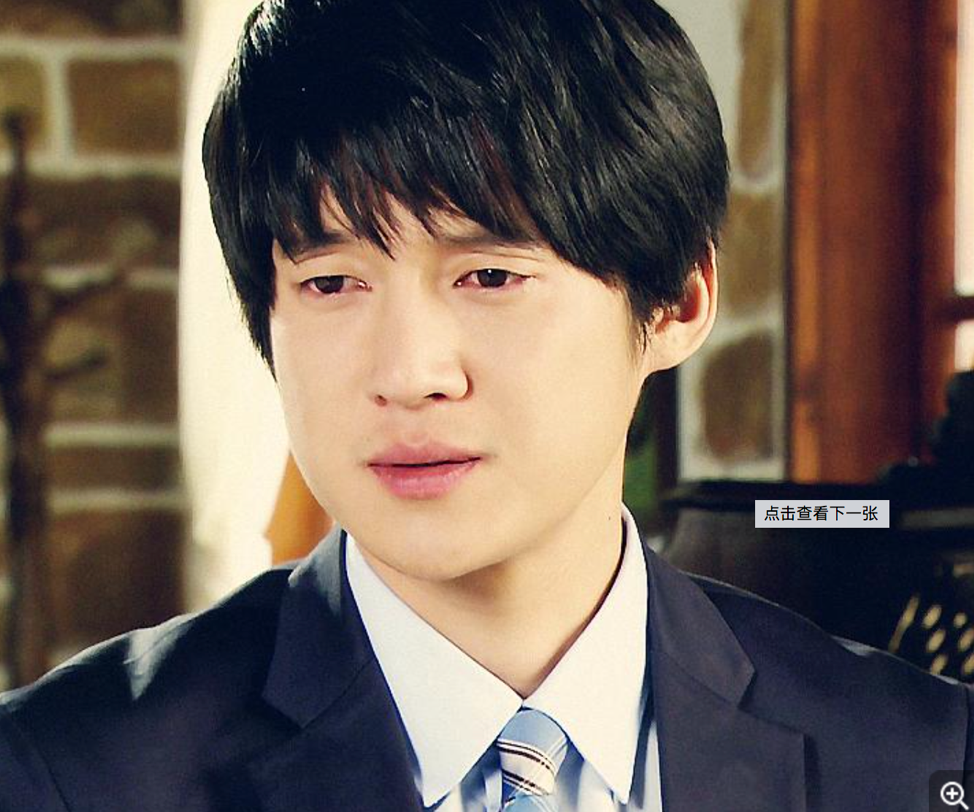
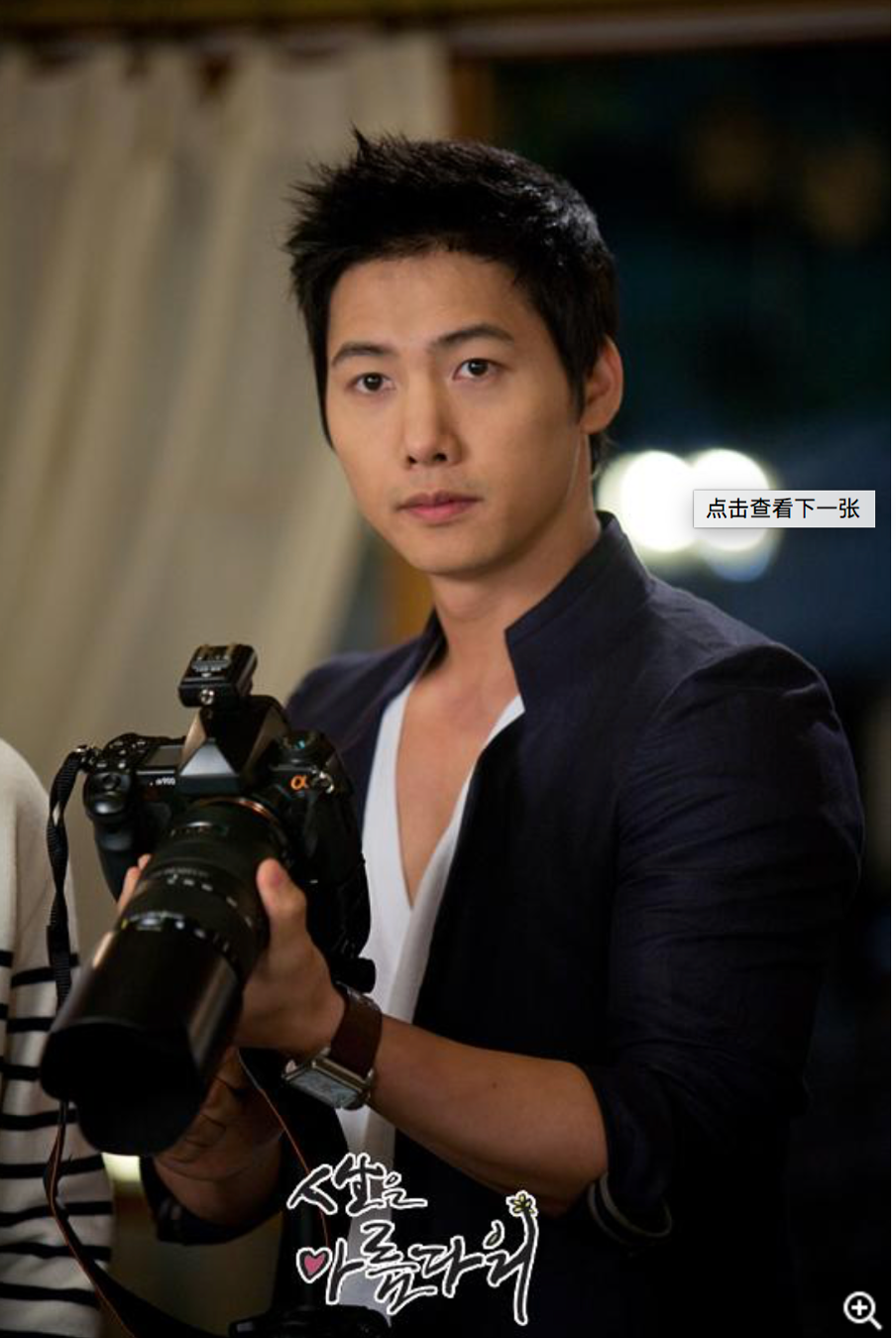
Doctor Tae-sub is portrayed as sensitive, shy, quiet, and delicate, while photographer and college teacher Kyung-soo is depicted as simple, outgoing, considerate, and passionate.

Tae-sub

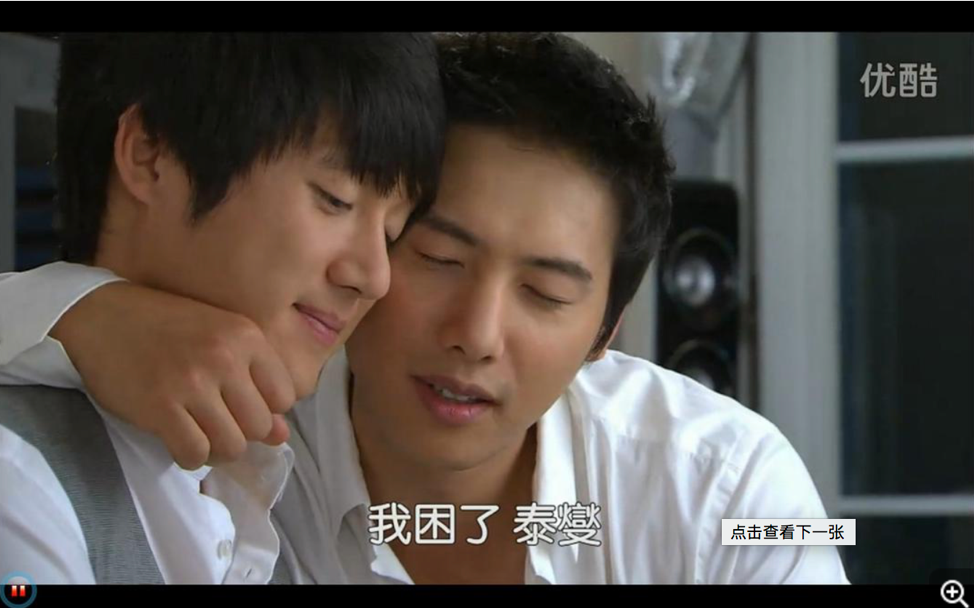
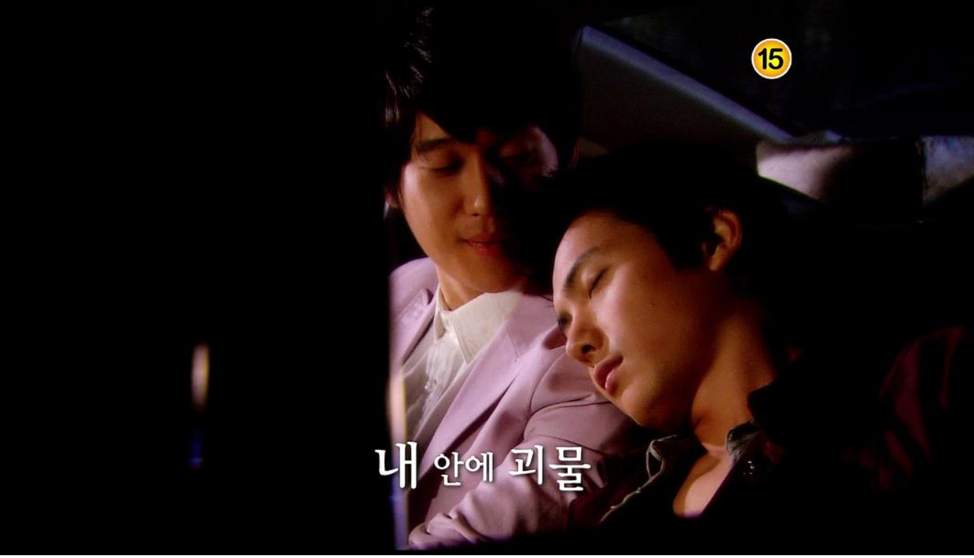
Kyung-soo is tall and muscular, while Tae-sub is shorter and slimmer. They fall in love at first sight on an airplane and have to secretly date to conceal their gay identity. The show doesn’t include kissing or love-making scenes; the closest physical contact shown is hugging. As it is a Korean show and marks the first time such a storyline is presented on television to a traditional Korean audience, it has already caused a significant impact.

Kyung-soo

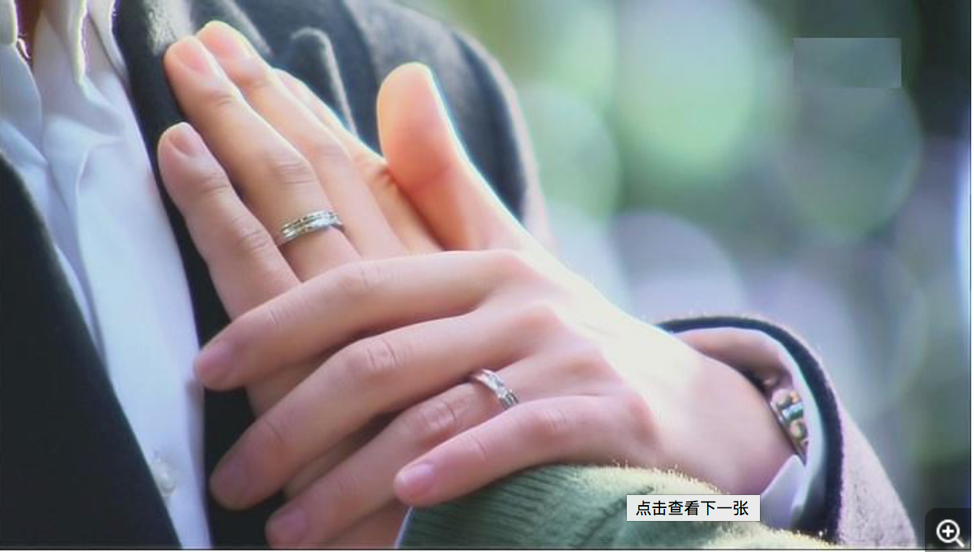
The couple rides bikes together on countryside roads, occasionally quarreling but quickly reconciling. They wear matching rings, take wedding photos, chase each other on the beach, and even pretend to be drunk to openly express their affection for one another. Moments like Tae-sub hugging Kyung-soo from behind, Kyung-soo grabbing Tae-sub’s hand and pulling him into a corner of the stairs, with Tae-sub’s hand gently touching the wall, and Kyung-soo playfully referring to Tae-sub as his wife and princess while teasing him about a deep, passionate kiss, have a powerful impact on the audience, rivaling that of any conventional romantic and passionate show.

Tae-sub and Kyung-soo

Actors Song Chang-eui (Tae-sub) and Lee Sang-woo (Kyung-soo) have done an exceptional job portraying their characters. Their performances have elevated the romance to a level that is not only beautiful, but also pure, warm, and, in my opinion, surpasses any BL films I have seen before. This is love—true love!

Tae-sub and Kyung-soo

I disrupted my sleeping schedule and stayed up until 3:00 am just to witness the ending. I scoured through all the MV cuts, immersed myself in the related songs, and delved into the actors’ interviews as well as their other shows and movies. I couldn’t detach myself from the story; it had me completely captivated.

Engaging rings

I hope there are others who also adore this show and are willing to share their sentiments and viewpoints with me!

My Favorite Screenwriter—Kim Soon-hyun

As I mentioned in my previous blog post, my admiration for Lee Soon Yoon has not diminished since I started watching his other show, “Life Is Beautiful,” which has received a high rating of 9.1 on the popular website Douban.

“Life Is Beautiful” consists of sixty-three episodes, with each episode lasting 60 minutes. Some Douban users commented that the high score is mainly due to the “gay topic.” Before I began watching it, I didn’t expect the show to be peaceful, slow-paced, and visually stunning. Most of the “gay” films and TV shows I’ve seen tend to depict love in an abnormal way. However, “Life Is Beautiful” presented a completely different perspective on love between two men. It is just as beautiful, passionate, and romantic as love between a man and a woman. This is true love itself, which is not influenced by wealth, appearance, nationality, gender, or any other factors.

Curious to learn more about the show, I researched and discovered that the screenwriter behind it is Kim Soon-hyun, whom I greatly admire and respect! After evaluating my watching list, I concluded that the three best TV shows are “Empresses in the Palace” from China, “Friends” from the USA, and “Men of the Bath House” from South Korea. The latter, which is written by Kim Soon-hyun, has made a lasting impression on me!

“Men of the Bath House” is a 1996 show that was dubbed in Chinese and spans 87 episodes. I have lost count of how many times I have watched it—whether I was feeling sad, doing housework, relaxing, or feeling lonely. Sometimes, I even let the show play in the background like soothing music. Kim Soon-hyun possesses exceptional skills in crafting compelling plots, depicting complex characters, and exploring social and familial contradictions. Her talent for employing vivid metaphors shines through the show. For example, Grandpa’s snoring was likened to wind rustling through the forests, marrying a man of few words was likened to driving through a dark tunnel, and the second girl wearing white on a blind date was likened to a stewardess. Each character in the show has their flaws yet remains lovable, and every subplot unfolds in a logical and natural manner.

Kim Soon-hyun, despite her petite stature, is a force to be reckoned with. She took legal action against the top television company in South Korea for stealing her ideas, and she emerged victorious! As a playwright, she not only writes the story but also selects the directors and establishes her own group of actors. Perhaps that’s why her shows are so impeccable—the writer herself is the soul of a show!

In “Men of the Bath House,” the writer dared to criticize government leaders and advocated for the reunification of North and South Korea. At the age of 67 (Kim Soon-hyun was born on January 27, 1943), she fearlessly presented a homosexual romantic story in a traditional Asian country like South Korea. She is both brave and open-minded! It is a fortunate thing to have her support for every pursuit of true love, and her work commands the respect of everyone!

I wish I could understand Korean and read her works in their original language. I sincerely hope that this exceptional writer continues to create remarkable works of art!

My New Idol—Lee Sang Yoon

My hobby of creating stories began in fourth grade of elementary school when I was nine years old. It all started when the first television set appeared in our remote and small village. They would broadcast “The Legend of The White Snake” on Monday, Wednesday, and Friday, airing two episodes each day. As I watched, I would imagine myself as a mighty martial artist who defeated the Monk Fahai and set the White Snake free from Leifeng Pagoda. Whether it was before falling asleep at night, walking along the roads during the day, or while doing housework, I would immerse myself in the novels I had just read or the TV shows and films I had watched. Sometimes, even a single picture could ignite my imagination, and most of my fantasies revolved around romantic stories.

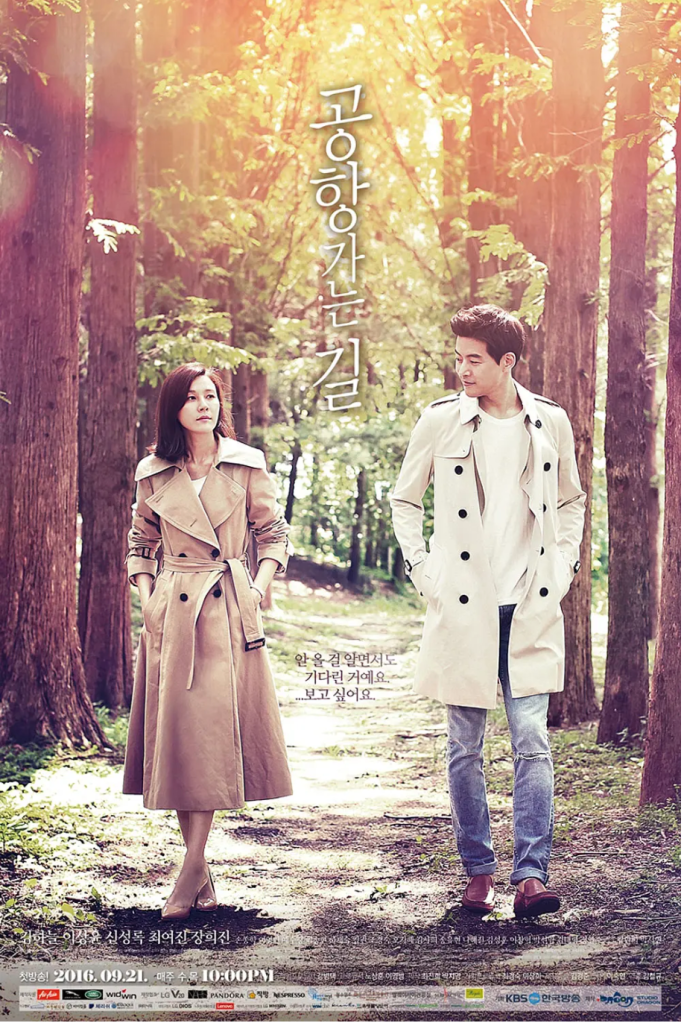
Last September, I finally made the decision to become a writer and editor. I crafted a plan and dedicated myself to studying diligently every day after work. However, perhaps due to the changing weather and the melting snow, or maybe because I was pushing myself too hard, my body resisted my desire to focus on books. So, I decided to take a break and searched for shows and films to help me relax. That’s when I stumbled upon Lee Sang Yoon’s performance in “On the Way to the Airport,” after trying out several new shows from different countries. Initially, it was the visuals, the music, and the story that captured my attention. But the more I watched, the more I found myself completely falling in love with Lee Sang Yoon, the male lead.


Lee Sang Yoon may not fit the conventional standards of a handsome man. He doesn’t have double eyelids or fair skin, and he isn’t the type of guy who immediately captivates audiences with his looks. However, when he smiles and his dimples deepen on his cheeks, when he gazes at someone with his passionate eyes, when his long-fingered hand, marked with crescent-shaped nails, holds cups or books, when he speaks softly and gently, or when he walks briskly and confidently, he becomes incredibly handsome and charming. He exudes warmth, kindness, modesty, and friendliness.

After the conclusion of the show “On the Way to the Airport,” I found myself unable to move on from Lee Sang Yoon. So, I decided to watch two more of his shows, namely “Whisper” and “My Daughter Seo-young.” Being an avid TV show and film enthusiast, I can confidently say that Lee Sang Yoon is an exceptional actor. His performances distinguish him in various roles, transcending his physical appearance. Whether portraying a tender father, a stern judge, or a passionate husband, his acting skills truly shine.


I have read about Lee Sang Yoon and watched his interviews, and I couldn’t find any scandals associated with him. He was born in Seoul, South Korea, in 1981, just one year older than me. It’s remarkable that despite pursuing an acting career, he managed to complete his bachelor’s degree in Physics from Seoul National University over a span of 13 years. It’s fascinating that he was a physics major and an actor at the same time.

Thanks to Lee Sang Yoon and his shows, I was able to take a much-needed rest and relax. Now, I believe it’s time for me to refocus on my studies and writing. Although I may not be able to meet my deadlines and might have to delay them by two weeks or more, I feel rejuvenated and ready to concentrate on my studies again. This is crucial. Just like Lee Sang Yoon, there’s no need to rush or stress; it’s important to be patient and take things slowly, both in our careers and in life.

New idols will eventually replace Lee Sang Yoon, but he has certainly had an impact on me during these days. If given the chance, I would express my heartfelt gratitude to him in person.

My Experiences of Writing in English


My first exposure to English was in Grade Seven when I was thirteen years old. I tried to memorize each word by associating its sound with similar Chinese pronunciations. I came across an article mentioning that some English learners studying Chinese used the phrase “shall buy two” to remember the Chinese characters for “小白兔” (the little white rabbit). Unfortunately, my school didn’t have enough resources to provide recorders, and the pronunciation we learned from our teacher was influenced by a strong southwestern Chinese dialect accent. I was the only one who accurately spelled out all the terms in the first lesson, which earned me praise from both my teacher and classmates. From that moment on, I fell in love with this foreign language and consistently achieved the highest scores in my class. After completing middle school, I enrolled in a Normal School for Special Education, where English was not a compulsory subject. The curriculum mainly focused on courses related to educating children with hearing loss, visual impairment, or intellectual disabilities. Upon graduating from the Normal School, I became a teacher who taught math, art, physical education, and music classes at an elementary school.

It wasn’t until seven years later that I had the opportunity to revisit English. I enrolled in college and chose English as my major. In our first class, my fifty-three classmates and I were surprised by three revelations:

  1. Our teacher’s self-introduction in English was eloquent, but we couldn’t understand what he was saying until he translated it into Chinese.
  2. Our teacher was reading an English book imported from the USA, which was thick yet lightweight and had a dollar price tag on the back cover.
  3. Our English proficiency was lacking in listening and speaking skills, despite our ability to read and write.

In 2014, I relocated to the USA. Similar to my experience in the first college class, I realized that my English was a mixture of “Chinglish,” where I struggled to understand slang, idioms, and comprehend government documents, product descriptions, and slogans. I lost confidence and became afraid to speak or write in English for some time. Following my husband’s suggestion, I joined a writing club. The club members were kind and friendly, and they encouraged me to share one of my English short stories. They pointed out numerous mistakes in my writing, but they also told me it was a good story and encouraged me to continue writing. That same year, I participated in NaNoWriMo (National Novel Writing Month) and completed my first manuscript for an English novel. It felt like winning the lottery. To this day, I have completed four drafts of English novels and am currently contemplating two more.

Writing English novels is a different experience compared to writing Chinese ones. I have published my first two Chinese novels on Chinese websites, although they only attracted a few readers. Once I signed the contracts, I had to increase the word count to meet the website’s requirements (the longer, the better) and update with at least 3000 characters daily. The focus was on speed and quantity rather than quality, and it was often referred to as “fast food literature.” I struggled to keep up with the website’s demands while trying not to lose my passion for writing. Eventually, I stopped submitting my novels to literature websites and instead posted them on my own Chinese blogs at http://blog.sina.com.cn/u/5280998549. I do have a few dedicated readers there! In comparison, writers here polish their manuscripts multiple times before publishing them. I truly appreciate and admire this kind of attitude.

Based on all of these experiences, I have concluded four factors about writing in English as a non-native speaker:

  1. Persistence: I learned that many people set goals and start writing, but only a small percentage actually finish their drafts. To combat this, I always made outlines before starting to write and set a specific timeframe to complete the manuscript. Instead of going back to read or correct what I had written, I kept pushing forward until it was done. Becoming part of the 10% who finish their drafts is challenging, but I encouraged myself to aim for even more, like expanding from 10% to 11% or beyond. This approach sounds easier and more motivating.
  2. Avoid comparing yourself to other writers and instead listen to your heart and follow your own routine. Comparisons often lead to frustration. When I was writing and sharing my first Chinese novel, I would research famous online writers. The more I learned about them, the more I would underestimate myself and fear continuing with my own writing. Whether we are beginners or experienced writers, it’s important to stick to our own goals and approach writing with confidence, just like a one-day-old puppy not fearing tigers.
  3. Ignore external factors and let internal passion drive you forward. Initially, when I published my novels, I cared a lot about attracting readers, getting “likes,” earning money, and becoming famous. I even daydreamed about being interviewed on popular TV programs. However, as reality set in and my imagined outcomes seemed distant, I began to doubt if writing was the right path for me. I took a break from writing. But eventually, I realized that my love for storytelling couldn’t be suppressed. I picked up my pen again and blocked out all external voices. Successful people understand that “fishing is more important than fish.” They don’t focus on external conditions, but rather on their internal passion. In the end, the rewards come to those who remain dedicated to their craft.
  4. Anytime and anywhere I have ideas, I make sure to write them down. Small ideas have the potential to grow into significant ones and become part of my written works. I also allow myself to watch TV shows or films to draw inspiration from them. However, it’s important to set reasonable time limits and practice self-control for these hobbies, as they can easily influence our careers and distract us from our writing.
  5. Reading and studying are crucial for improving our writing skills and maintaining a passion for storytelling. As a non-native English writer, I have found inspiration from authors such as Khaled Hosseini, the author of “The Kite Runner,” and Min Jin Lee, the author of “Pachinko.” I have also learned a great deal from reading books like “Gone with the Wind,” “The Best American Essays,” and “The Cambridge Grammar of the English Language.” If writing is like building a house, then reading and studying help us choose better materials and design better floor plans.

Writing is a challenging career, especially when writing in a second language. Fortunately, I have found myself on the right path, and I thoroughly enjoy walking this road. Every day, as I make progress, I feel happy and fulfilled. Meeting like-minded friends would be an added bonus to my life.

Let’s continue to live, keep moving forward, and keep writing!

Chinese Style “Bacon”—Smoked Pork in Southwest of China

There’s a festival in China called “Winter’s Arrival.” From that day on, the temperature drops to its lowest, and the daytime grows shorter. In my hometown of Guizhou province, southwest China, between “Winter’s Arrival” and Chinese New Year’s Day, people butcher their pigs and make Chinese-style bacon—smoked pork.

If the farmers’ harvest was poor, they fed their pigs with only wild grass, and the pigs grew thin. As chemical fertilizers became popular and the yield increased, villagers added chopped potatoes and corn powder to the pigs’ food, and the pigs grew fat. When fodder appeared in markets, people in my hometown fed two kinds of pigs: the ones without fodder were kept for family use, and the others fed with fodder that grew fat quickly were sold to the market in the towns or cities.

As soon as “Winter’s Arrival” came to my home village, people started to butcher their pigs and store the meat for the following year. Neighbors helped each other. It was heart-wrenching to see the bloody butchering and hear the pigs’ miserable and scary screams. After the butcher killed the pig and blew air into it from a cut hole on its leg, the helpers poured hot water onto it and shaved its hair. The butcher cut off its head and all fours, and they hung it on a wooden ladder. The butcher ripped it open vertically from its neck, through the belly, to the butt. Villagers used their fingers to measure the fat—three fingers wide, four fingers wide, and five fingers wide—the whole village would admire the one whose pig got the biggest size.

After the butcher took out all the innards, the helpers washed the intestines or stored the other organs. The butcher cut the pig into two parts and divided each into small pieces according to the host’s requirements. Usually, one piece contained two ribs. On the top of each piece, a hole was drilled, and a roasted, soft palm-leaf-made rope was put through and tied at the end. Then, the piece was sent to a big container where the host sprinkled salt all over the meat. All the salted meat was kept in sealed containers until the salt was soaked.

After about five days, the villagers set up a smoking spot with a shelf in the storage room corner, kitchen, or main room to hold the meat. They made a fire underneath it, burning branches of cypress trees, corn cores, and wood leftovers. That process is what we call “smoking the meat.” People use cypress tree branches because they smell uniquely fresh and sweet. The smoking process usually lasts 3-5 days until the skins turn golden and the meat becomes dry and dark. Finally, people stored the cooled meat in a low-temperature, ventilated place.

Smoking pork is a dangerous job. Once, when we were small, my parents went to work on the farm, leaving my two younger brothers and me at home. They asked us to add cypress branches to the fire. Suddenly, one leg of the shelf started burning, and we were scared. I quickly took my youngest brother outside, while my other brother ran to the land to tell my father. My father rushed home and poured water to extinguish the burning part in time. If it had continued burning and the leg had broken, all the meat would have fallen into the fire, resulting in an unavoidable disaster. Every year, there are accidents related to pork smoking. Some people have burned all their pork, and others have even burned down their houses. But regardless of what happens, making “smoked pork” remains a prominent tradition among the village people. It symbolizes their hard work in raising the pigs and provides the most valuable food supply for the following year. People living in cities often buy pigs from farmers and request the sellers to smoke the meat before delivering it. Some families make smoked meat in the city markets, but it is not as delicious as the one prepared by the people who raise and smoke the pigs themselves.

On significant farm days, such as during the planting and harvesting of corn, potatoes, and wheat, or on important events like when relatives visit, birthdays, or festivals such as Mooncake Day, the Dragon Boat Festival, and Chinese New Year, smoked pork becomes a main dish. The host fetches the smoked meat, removes the palm-leaf-made rope, crisps the pork skin by burning it, washes the meat, and cuts it into small pieces, about the size of half a palm. They then boil it until the skins become soft and fry it with potatoes, carrots, turnips, or garlic shoots. This results in a delicious smoked pork dish. Since I left my hometown, I have never tasted a smoked pork dish as delicious as the ones made by the people in my hometown.

Last year, my mother-in-law bought a whole pig and gave us half of it. Here in Minnesota, the butchering process is different. However, the smoked hocks tasted very similar to the ones my parents used to cook after they were stewed. After finishing the four smoked hocks, I bought twelve more. When we buy a pig this winter, I will ask the butcher to keep the skin and smoke it if they allow. Then, I will cook smoked meat for my friends and family here in the US, allowing them to experience the taste of my hometown-style “bacon.”

My Old House

This article is translated and rewritten based on my Chinese diary posted on my QQ Zone on 27th February 2011.

In 2010, my parents made the decision to build a new house by the road, after living in our old house for nearly thirty years. Since I left my hometown at the age of fifteen, I hadn’t spent much time in the new home. So, when I dreamed about my childhood at night, those dreams were always about the old house.

During the Spring Festival of 2011, I returned to my hometown. On a sunny day, I took my four-year-old nephew to visit the site of the old house. The adorable boy skipped ahead of me on the narrow road made of cement, earth, and stones. This road connected my old house to the main road and our main farmland. On this long and winding road, we used to carry coals, corn, potatoes, and raw tobacco leaves back home. I had told friends living on the plains that my house was on a mountain, but they had no idea what “on a mountain” really meant.

The clay and stone walls had been knocked down, leaving only the front wall standing, reaching up to my height. There were a few white pieces of lime hanging here and there, along with a pair of faded New Year scrolls on the right and left sides of the window frame. The cemented floor was covered in earth, and it appeared smaller than when we lived there.

The house was originally built as two large rooms. Like all the houses in the village, the left room served as the main room for ancestor worship. It was also the place where I played with sandbags and shuttlecocks, while my brothers played with paper-folded squares and fought with each other. My father’s carpentry workshop was also located in this room, where he made tables, chairs, doors, window frames, and beds. The right room was divided into two smaller rooms, with the back one serving as my parents’ bedroom and storage area, and the front one serving as the kitchen, living room, dining room, and me and my brother’s bedroom. The small window was covered with semi-transparent plastic, allowing dim light to enter the room. I can’t recall when it happened, but my father had placed a palm-sized square glass at the bottom right corner of the window. At night, the three of us would gather around the square glass to catch a glimpse of the faint flickering light from the cypress-skin-made fire torch. It was a signal that my parents were returning home after helping our neighbors with farming or other important events.

At last, the semi-transparent plastic was replaced with clear glass, the tree-skin torch with an electric one, the clay stove with an iron furnace, and the kerosene lamps with electric lamps.

When my brothers and I started going to school—I was in Grade Five, my first brother in Grade Three, and the youngest one in Grade One—we were outstanding students and excelled in our studies. My bed faced the window, while my brothers’ beds were positioned next to it. Between the stove and my bed, there was a square table where we would do our homework. The side of my bed was far from the furnace and not warm, the right side was dimmer when we wrote, and the perfect spot was on the left side. So, on weekends or holidays, every morning when we woke up, the first thing we did was fight for the left seat. Looking back, the more crowded it was, the warmer and happier we felt.

I started reading novels and stories in Grade Five and would often stay up late. Sitting in bed, I would place the novel over a textbook and read until my parents asked me to rest because I had to wake up early the next day. Whenever I heard my mom or dad get up from bed, I would quickly push the novel under the blanket and pretend to be reading a Chinese or English book. My father was proud of me and would ask my brothers to take me as an example of someone who studied diligently until midnight! Little did they know my secret, lol!

When I entered middle school, my dad built three stone rooms at the back of the house. I had the room on the right, and my brothers had the one on the left. The middle room, without a window, was used for storage. I was so excited to have my own room that I worked tirelessly to clean it when we were asked to remove the earth. Since the rooms were built against the slope of the earth, they were prone to humidity. Whenever it rained, the rooms would flood. In the corner of my room, grass grew, and in the gaps between the stones, which were filled with earth to hold them together, light green empress trees sprouted. I had a small bookshelf, although it mostly contained school books that needed to be placed in the sunlight to prevent them from becoming moldy.

On the left side of the house, there was an empty plot of land. When I was a child, my mom would sit me down on that land and comb my hair under the warm spring sunshine. To earn money to support our higher education after we finished middle school, my parents started growing tobacco. They built a tobacco drying house on that land. I have no idea how many times my dad had to wake up in the middle of the night to check the temperature and humidity and add coal to the stove. But I do remember that during the tobacco harvest season, when the corn was ripe, we would pluck the tender corn from the stalk, peel off the skin, insert a metal bar through the core, and place it over the stove in the drying room. Soon, the corn would turn a dark golden color, pop, and become sticky, sweet, and crispy to taste.

My parents didn’t buy a television because they thought it might distract us from studying and wanted to save money. During summer nights, we would all gather in the yard. Two elms stood beside the yard, accompanied by two round stone benches. The sky stretched tall and blue, adorned with countless stars, and the moon shone big and bright. Shooting stars were a common sight, and airplanes mingled with the stars, leaving long white trails in the sky. Especially during the milky way season, the stars were particularly abundant. The entire village was quiet. A man we called “Uncle Xie” lived in a higher position than our home and would often play the flute or the erhu, filling the village with music. Mom and Dad would discuss the price of chemical fertilizers, the low selling price of the potatoes in the market, the weather, and the next day’s farming plans. My eldest brother would gaze at the sky, humming and asking peculiar questions like, “Why is that star big, but that one is so small?” “Why is the moon round?” and “What does it feel like to take a plane?” My youngest brother would jump around the yard, pretending to be the monkey from the show “Journey to the West,” holding a bamboo stick and shouting, “Shifu! Shifu!” (Master, Master). When we finally bought a TV, only Dad would take a brief break in the yard after dinner, and then we would all gather around the stove to watch TV shows.

I was lost in my memories until my nephew called out to me and said he loved the new house more. I felt a sense of longing—I missed the old house. Seeing the piles of earth, I knew I couldn’t go back anymore. Even if the house could be rebuilt exactly as it was before, the stories and moments couldn’t be recreated. I am someone who despises parting with friends and cherished moments, but a friend once told me, “Time is easy to pass, but life always moves forward.” Yes, life goes on, and more exciting stories await. I took one last look at the site of the old house, holding my nephew’s hand, and returned to the new house. In the future, when I reminisce about those old stories, I can smile and feel a sense of security; that is enough.

P.S.

In April 2016, I returned to my hometown with my 14-month-old son. My mom accompanied us to the old house. The site was as flat as any other regular farmland, covered with corn, pumpkins, and bean shoots. There was no trace left to indicate that a house once stood there. My son stumbled on the earth, picking up dirt and tossing it away, murmuring and giggling. It was also a sunny and warm day, but I didn’t feel as lost as I did in 2011.

Caves and Stream


My hometown, Jinsha County in Guizhou Province, China, belongs to the karst region, characterized by mountains upon mountains, hills upon hills, valleys, streams, and scattered caves.

My village is situated on a mountain, while neighboring villages are located on other mountains. The mountain that holds my village is directly across from another mountain, rising up from the exact bottom and forming a valley. Each mountain has multiple peaks, resembling the fingers of a hand; the taller the mountains grow, the smaller their peaks become, resembling cones. The valley is not long or straight but is blocked by other mountains at both ends. At a spot around two-thirds of the way up my mountain, a smaller mountain emerges, and at its base originates the only stream in my village.

When I was young, I would often cut grass for pigs along the stream with my little friends. The earth there is deep brown and loose, and we call it “sandy earth.” Various types of grasses for pigs thrived on the stream banks, and we would quickly fill our baskets. Afterwards, we would search for crabs, which always hid under the stones in the stream, or simply play with the cool and clear water.

In the middle of the valley, there is a flat piece of land above an artificial tunnel, through which the stream flows. It was said that the government had planned to construct a reservoir, but scientists opposed the idea because the land couldn’t hold water. Thus, the tunnel was left as a play area for children and provided shade for weary farmers during hot summers.

Running out of the tunnel, most of the water flowed towards the right side, irrigating the village’s only paddy fields. Before reaching the terrace-like rice fields, the water passed over two large connected sloping stones. The upper stone was steep and covered in moss, while the lower one was wide and flat. During summer noons, girls would bring their dirty clothes to the stream and place them on the flat stone. They would then step on the clothes to clean them before hanging them over the bushes to dry. While waiting for the clothes to dry, the girls would sit on the stones beneath the cypress trees, knitting sweaters, gossiping, and laughing. The boys, who were cowherds, would take naps or play cards in the shade of cool rocks under the trees, while their cows grazed in the bushes or drank water upstream from the sloping stones. Children, accompanied by their older siblings, would chase dragonflies in the fields using a homemade catching tool—a wire loop covered with spider nets attached to a long bamboo stick. Once a dragonfly touched the net, it was unlikely to escape. The sky was a vast blue, and the sun shone brightly.

The paddy fields were situated far from the residential center, with only one family living nearby. Whenever we went to our fields, we had to pass by that house. The old man living there was well-known for his uncut hair, which resembled a tangled nest and had turned a deep yellow color.

The remaining water in the stream continued to flow into the caves. Although my village was named “Three Caves,” there were actually four caves in a line below the tunnel: two above the road and two below it.


I had ventured into the second cave with one of my friends. Despite our parents forbidding us to enter the caves, our curiosity was too strong to resist the warnings. It was a summer noon, and due to the drought, there was a lack of grass for the pigs on the farms. My friend and I, both around ten years old, decided to explore the cave to see if there were any grasses inside. We each carried a bamboo basket on our backs and held sickles in our hands as we cautiously and slowly made our way into the cave, with our main concern being the presence of snakes.

The path was narrow and covered with tall grass that we had to cut through in order to find our way. It was disappointing to discover that the tall grass was not suitable for the pigs. As we descended further, the sunlight faded away, and our faces were greeted by cool air. It felt as if we had transitioned from a bright summer day to a deep autumn in an instant. Along the shallow areas on the rocks, we found thriving tender grass. In a short amount of time, our baskets were filled with grass. Leaving the baskets halfway, we continued our descent. The deeper we went, the drier the land became.

Eventually, there were no plants, only dry earth. At the base of the rock, antlions had burrowed into the dry, yellow soil, leaving behind numerous ring-shaped soil piles. We paused to observe the antlions but quickly grew bored and proceeded to the bottom of the cave. On one side, the entrance provided light, allowing us to see the yellow earth, the stones, the steep rocks, the dripping stalactites hanging above us, and strands of cirrus floating down from the high entrance. On the other side, opposite to us, darkness engulfed everything, and nothing could be seen except for the sound of rushing water. As the adults had told us, it was an invisible river that once flowed on the surface of the land, which was why there had been plans to build a reservoir. However, the river had suddenly disappeared. We threw stones into the darkness and heard them hit the rocks, with the sound echoing fainter and fainter. The echoes persisted for a significant amount of time before gradually fading away completely.

Cold and scared, our curiosity satisfied, the cave felt like another world devoid of sun, wind, and human presence, but filled with eerie sounds and unseen creatures. Our parents’ warnings echoed in our minds. We screamed, laughed, and hastily ran back to retrieve our baskets, leaving the darkness and coldness behind. Just as I had placed the basket on my back, a black snake slithered across my foot! The rest of that day, I couldn’t shake off the feeling that snakes were lurking behind me. When I arrived home, my mother inspected the grass and declared it unsafe for the pigs, so I disposed of it in the trash pile.

That was my only experience venturing into the cave, and it did not leave me with pleasant memories. However, there are numerous stories associated with the caves. One story dates back to the late 1980s when the entire town engaged in an activity called “hiding from falling rockets.” After a rocket was launched into the sky, its casing would descend onto certain areas around my hometown. Villagers, especially children, were excited and ran out to the mountains. Some neighbors sought refuge in the cave, but one of them ended up breaking her arm while climbing on a dry stone inside. As I grew older and learned about rockets, I realized that seeking shelter in the cave was a risky decision. If a rocket had fallen directly into the cave, it could have shattered the rocks and caused severe damage.

In another story, the most beautiful girl in my village married a man who lived far away. After giving birth to two children, he abandoned her. The girl returned to live with her parents, and her divorce was considered a significant shame. One day, while the girl and her family were planting potatoes near the caves, she jumped into the third cave, which was filled with tall trees! Fortunately, people discovered her lying at the bottom without any injuries. Villagers concluded that the trees in the third cave somehow reduced gravity and protected her.

In a third story, a drunken man walked along the road between the second and third cave, but no one knew why or how he fell into one of the caves. Firefighters from a distant city had to rescue him, but unfortunately, he didn’t survive.

The fourth cave, located at the bottom of the mountain and the furthest from the village, was called “Seven Girls’ Cave.” Unlike the other caves with expansive openings facing the sky, the entrance of the fourth cave resembled a small door tucked beneath a rock. Elderly residents shared a tale about seven girls who used to reside there, each adorned in a white silk dress with long black hair and exceptional beauty. However, they were unable to leave the cave because as soon as sunlight touched their bodies, they would instantly turn into black coal.

One of my farmlands features a few small holes, and when we threw stones into them, the sound echoed after a prolonged period. On the opposite mountain from my village, two caves can be seen within the white crevice. One of them is nestled within a protrusion resembling a cow’s nose, hence its name “Cow’s Nose Cave.” The older generation shared stories about humans who once inhabited these caves. However, given their vertical location in the crevice, it remains a mystery as to how people accessed them.

When the villagers installed water pipes from the stream to provide water to each family, the stream ceased to exist. Although I haven’t returned to the tunnel, I’m unsure whether it collapsed or not, but I am certain there are no longer any crabs. As I walked along the road between the caves after dinner, the entrance was no longer visible. People informed me that no one ventures into the caves anymore.

Last year, a cave was discovered in a neighboring town, adorned with stunning and unique stalactites. The government plans to develop it into a tourist attraction. Consequently, the people of my village suggest that the “Three Caves” should also be developed. However, experts argue that the “Three Caves” are not worth visiting.

But to me, the caves and stream hold immeasurable value. They not only represent my youthful memories but also symbolize my hometown today. Although I may never have the opportunity to revisit the tunnel, explore the caves, or dig for crabs in the stream again, their significance remains unmatched.